
PARK GÜELL HISTORY
The story of Park Güell
Park Güell is a famous public park in Barcelona, designed by the renowned Spanish architect Antoni Gaudí. It was created at the request of Eusebi Güell, a wealthy industrialist, in the early 1900s as part of a grand residential development. The original plan was to create a luxurious housing area with beautiful green spaces inspired by British garden cities. However, the project was never completed due to challenges with the location and a lack of buyers. Today, Park Güell is declared a UNESCO World Heritage site and a popular tourist destination, loved by both locals and visitors for its unique architecture and integration with nature.

The rise of Catalan Modernisme
In 1900, Barcelona was growing quickly, driven by industrial development and the expansion of the Eixample district, which was designed to make the city healthier and better organized. During the 1888 Universal Exhibition, the rise of Modernisme, a style that combined new ideas with Catalan traditions, made Antoni Gaudí an important figure in Barcelona’s architecture.
Architects like Gaudí, Lluís Domènech i Montaner, and Josep Puig i Cadafalch were inspired by the Eixample’s development and began to innovate with new materials and building techniques and combine them with historical elements.

Eusebi Güell: The wealthy philanthropist who made Park Güell a reality
Eusebi Güell (1846–1918) was a wealthy Catalan industrialist and philanthropist who played a key role in Antoni Gaudí’s career. His support enabled Gaudí to create iconic works like Park Güell and the crypt at Colònia Güell. Their partnership began in 1878 after Güell saw Gaudí’s window display at the Universal Exhibition in Paris. Güell, a prosperous textile entrepreneur who helped develop Barcelona’s first public transport system, shared Gaudí’s vision of combining art and nature, which led to some of Gaudí’s most celebrated creations. In 1899, Güell bought the expansive Muntanya Pelada (Bare Mountain) outside Barcelona to develop a luxury residential community. He hired Gaudí in 1900 to design it as a garden city with 60 plots for upper-class families.

The vision for Park Güell
Gaudí’s design for Park Güell carefully blended the natural landscape with winding paths, viaducts, and steps that followed the shape of the hilly terrain. He preserved the area’s natural beauty, using local plants like carob and olive trees, creating a smooth connection between nature and architecture.
The project was intended to be both a residential area and a public park where people could live and enjoy nature. The name “Park Güell” reflected this idea, offering a peaceful place where art and nature came together, allowing visitors to relax and appreciate the beauty of the environment.

Timeline of Park Güell’s construction
Construction of Park Güell began in October 1900, with the site being divided and construction proceeding at a steady pace. By January 1903, the water evacuation system and the key features like the entrance pavilions, main steps, shelter, viaducts, and part of the esplanade were completed. In 1902, Martí Trias bought the first plot and built a villa, and a show house was constructed to attract buyers. Gaudí moved in with his family in 1906. By 1907, events were being held in the Great Square, and the Hypostyle Room was fully covered. The iconic tiled bench was completed in 1914.

The challenges of residential development
Despite the ambitious design, the residential development faced several significant challenges. The first was its location. The park was on the hill, far from the city center, and lacked good access, making it hard for people to reach. The other challenge was poor sales. Despite efforts to improve access, the development struggled to attract buyers, so only two of the planned 60 homes were built. As a result, the project was abandoned in 1914.
Explore art, architecture & nature in Park Güell

Park Güell & Casa del Guarda priority entry
Park Güell Skip-the-Line Ticket
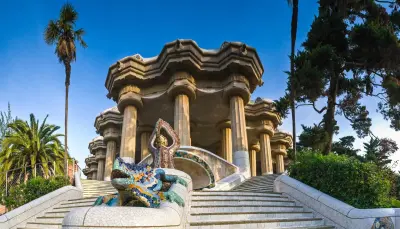
Discover Park Güell, one of Gaudí’s most famous creations in Barcelona. Enjoy easy access to the Monumental Zone and explore the park’s unique architecture. See the colorful Dragon Stairway, the famous "El Drac" Salamander statue, and Gaudí’s beautiful mosaics. Walk through the gardens, see the charming Casa del Guarda, and enjoy stunning views of Barcelona. Relax and stay as long as you like - your ticket is valid all day, so you can explore at your own pace.

Public park
After the project was abandoned due to lack of interest, the park became a private garden for public events and appeared in tourist guides. After Eusebi Güell died in 1918, his heirs sold the land to the City of Barcelona in 1922. The park opened to the public in 1926, and the Güell family house was turned into a school. In 1963, Gaudí’s house in the park became the Gaudí House Museum.

Cultural and historical landmark
After the City of Barcelona bought Park Güell, it remained a peaceful retreat in the city’s upper area, connecting with the nearby Tres Turons Park. Over time, the park became one of the city’s top attractions. In 1969, this artistic monument was declared a Cultural Property of National Interest for its architectural and historical value. It was made a UNESCO World Heritage Site in 1984 as part of the Works of Antoni Gaudí, recognizing it as a key example of Catalan Modernisme (Art Nouveau). Today, it’s one of Barcelona’s top attractions, known for its unique design and natural beauty.

Barcelona’s green space
Today, Park Güell is a 19-hectare green space in the city. About 76,000 people live nearby in the busy district of Barcelona. The park helps ease urban pressure and improves the environment and quality of life for local residents. It provides a relaxing space for locals and a path for pedestrians. Other measures, like calming traffic, expanding areas for pedestrians and cyclists, and turning some streets into pedestrian zones, have also helped make the area healthier and more peaceful.

Tourism and preservation challenges
To protect Park Güell’s delicate areas and manage the growing number of visitors, Barcelona City Council introduced measures to limit access to the most sensitive parts of the park. This helps preserve the park for future generations. Ongoing restoration work is important to keep its cultural value. One challenge is balancing the needs of tourists with the desire for tranquility among local residents. The revenue from regulating access is used to improve and renovate the park, including its green spaces, pathways, viewing points, and play areas.

Legacy of Park Güell
Although the original plan for homes at Park Güell was never completed, the park remains a timeless symbol of Gaudí’s artistic skills. Its imaginative design, link to nature, and unique style have made it one of Barcelona’s most famous landmarks. Today, Park Güell is a public heritage site that attracts millions of visitors each year. The park also emphasizes sustainability, with efforts to preserve its beauty for the next generations. It remains a symbol of Gaudí’s genius and a cherished part of Barcelona’s cultural heritage.
Join one of our popular tours & discover the story behind Gaudi’s masterpieces

Avoid a crowd
Park Güell Small-Group Tour
Join a small group tour of Park Güell and experience architect Antoni Gaudí’s colorful masterpiece with a knowledgeable guide. Skip the lines and explore this UNESCO World Heritage site’s stunning bright mosaics, playful architecture, and panoramic views of Barcelona. With a limited group size, enjoy a more personalized and intimate experience as you learn about the history and design behind this iconic park.

A complete look into Gaudí's work
Gaudí Tour Barcelona
Discover Gaudí's Barcelona on a guided tour of his most impressive landmarks. Visit his incredible masterpiece, Sagrada Família, and learn about its interesting history. Explore the colorful Park Güell, where design and nature blend beautifully. View the unique Casa Batlló, with its imaginative architecture, and Casa Milà (La Pedrera), a symbol of Gaudí's creativity. Discover the charm of Casa Vicens, his first significant work. Access all sites quickly and enjoy hearing the stories about Gaudí's life and legacy.